
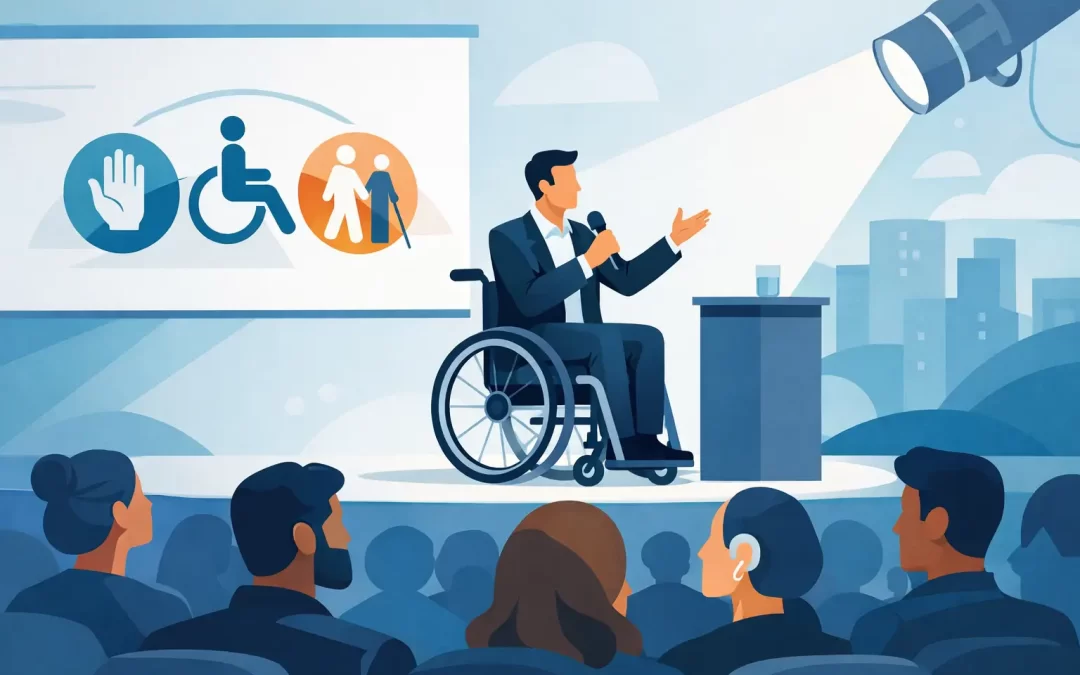
A disability inclusion keynote speaker should do more than tell an audience that inclusion matters. The right speaker makes people feel the stakes, see the human potential often missed by conventional assumptions, and leave with a sharper understanding of what high-performing teams require from one another.
For event planners and business leaders, that distinction matters. A keynote may be the one moment when employees, senior executives, clients, and partners share the same room and hear the same message. When disability inclusion is presented with credibility, candor, and real achievement behind it, the conversation moves beyond compliance. It becomes about leadership under pressure, better communication, resourceful problem-solving, and the belief that together – anything is possible.
Inclusion Is a Performance Conversation
Too often, disability inclusion is framed as a policy conversation: accommodations, procedures, and legal obligations. Those elements matter. They create essential protections and access. But policy alone rarely changes the daily behaviors that determine whether people feel respected, trusted, and able to contribute at their highest level.
A powerful disability inclusion keynote speaker helps an organization connect inclusion to performance. Teams perform better when people can ask for what they need without fear. Leaders make better decisions when they stop treating difference as a distraction and start seeing it as information. Sales organizations become more resilient when setbacks are met with creativity rather than judgment.
This is not about lowering expectations. It is about removing the false limits that prevent people from meeting them. The strongest inclusion message challenges an audience to hold a high bar while expanding the ways people can reach it.
That message carries particular weight when it comes from someone whose life has required him to confront other people’s assumptions in real time. An expedition story can make that lesson immediate. On a mountain, no team succeeds because everyone contributes in identical ways. Success depends on preparation, trust, communication, and the willingness to adapt when conditions change.
What Makes a Disability Inclusion Keynote Speaker Credible
Credentials alone do not create a memorable keynote. An accomplished biography can capture attention, but audiences need a reason to see themselves in the story. The most effective speakers bring together lived experience, practical relevance, and the vulnerability to talk honestly about the moments when the outcome was not guaranteed.
Gary Guller’s journey as the first person with one arm to summit Mount Everest gives that conversation uncommon authority. The summit is an extraordinary achievement. Yet the deeper lesson is not that every employee needs to climb a mountain. It is that meaningful goals demand a different relationship with limitation.
Guller also led a record-setting cross-disability expedition to Everest Base Camp. That experience expands the story from individual perseverance to collective capability. It demonstrates what happens when a group refuses to define its members by a perceived deficit and instead organizes around shared purpose, preparation, and mutual accountability.
For a corporate audience, those lessons are immediately recognizable. A strategic initiative stalls when teams work in silos. A sales force loses momentum when rejection becomes personal. A leader underestimates a colleague because communication styles differ. A workplace may have good intentions yet still create barriers through rushed meetings, inaccessible systems, or assumptions about who is ready for the next opportunity.
A keynote with real-world evidence gives people a language for recognizing those barriers and responding with greater skill.
From Inspiration to Action on Monday Morning
The best keynote does not end with applause and a striking image on a screen. It changes the questions people ask when they return to work.
Instead of asking, “Can this person do the job?” leaders begin asking, “What conditions will help this person do their best work?” Instead of assuming silence means agreement, teams become more deliberate about how they invite ideas, clarify expectations, and make decisions. Instead of treating a setback as proof that a goal was unrealistic, they assess what can be adjusted and who needs to be involved.
That is where an experience-led inclusion keynote becomes especially valuable. It offers audiences a shared reference point. They remember the climb, the weather, the exhaustion, the decisions made when turning back was possible. The story creates emotional recall. The business application gives that recall a purpose.
For leadership teams, the takeaway may be accountability. Leaders set the tone when they make room for people to speak honestly about obstacles. For sales organizations, the message may be resilience: a difficult quarter does not define a team that can regroup, learn, and execute. For HR and learning leaders, it may be belonging: people are more likely to stay, grow, and contribute when they know they do not have to hide part of themselves to be valued.
The specific emphasis should depend on the event. A company undergoing change may need a message centered on adaptability. An annual kickoff may call for energy, ambition, and team alignment. A university audience may respond most strongly to personal courage and the discipline of pursuing a goal that feels beyond reach. The right speaker adapts the application without diluting the central truth.
Why the Delivery Format Matters
Disability inclusion can be a sensitive subject. A keynote must be direct enough to challenge assumptions without making an audience defensive or reducing disability to a source of inspiration for others. That balance requires maturity.
Story-led delivery is especially effective because it allows people to encounter the subject through a human experience rather than a lecture. Vivid expedition images, documentary footage, and moments of honest reflection help an audience connect before they are asked to reconsider their own habits. The message lands not as a mandate, but as an invitation to lead with more courage and awareness.
A premium keynote also needs to work at the scale of the event. A speaker should be able to hold a large conference room, connect with executives and frontline employees alike, and support the visual production standards of a major corporate gathering. An extraordinary personal story deserves polished delivery, but polish should never erase the human truth at its center.
When audiences see the evidence of what has been accomplished, they pay attention. When they hear the uncertainty, pain, teamwork, and persistence behind the accomplishment, they relate. That combination is what turns a remarkable life story into a message that can move an organization.
Choosing the Right Speaker for Your Event
Event planners should look beyond a speaker’s topic label. “Disability inclusion” can mean many things, and not every keynote is designed for the same outcome. Start with the business moment your audience is facing.
If the priority is culture, look for a speaker who can connect inclusion with trust and everyday leadership behavior. If the event is a sales kickoff, choose someone who can translate adversity into competitive resilience and disciplined execution. If the audience includes clients, investors, or association members, consider whether the presentation has the authority, visual impact, and broad relevance to make the program memorable across different roles.
It is also worth asking how the speaker handles practical application. A moving personal story is valuable, but your audience should leave with more than admiration. They should leave with a clearer sense of how to communicate, collaborate, and respond when the path forward is uncertain.
Finally, consider the message your speaker choice sends. Bringing disability inclusion to the main stage says that it is not a side topic reserved for a small internal program. It says that human potential, access, and shared achievement belong at the center of how the organization defines leadership.
A mountain summit is never reached by pretending the climb is easy. It is reached one decision, one step, and one act of teamwork at a time. Give your audience a message that honors the difficulty, raises their expectations of one another, and reminds them that their next impossible goal may be closer than they think.