
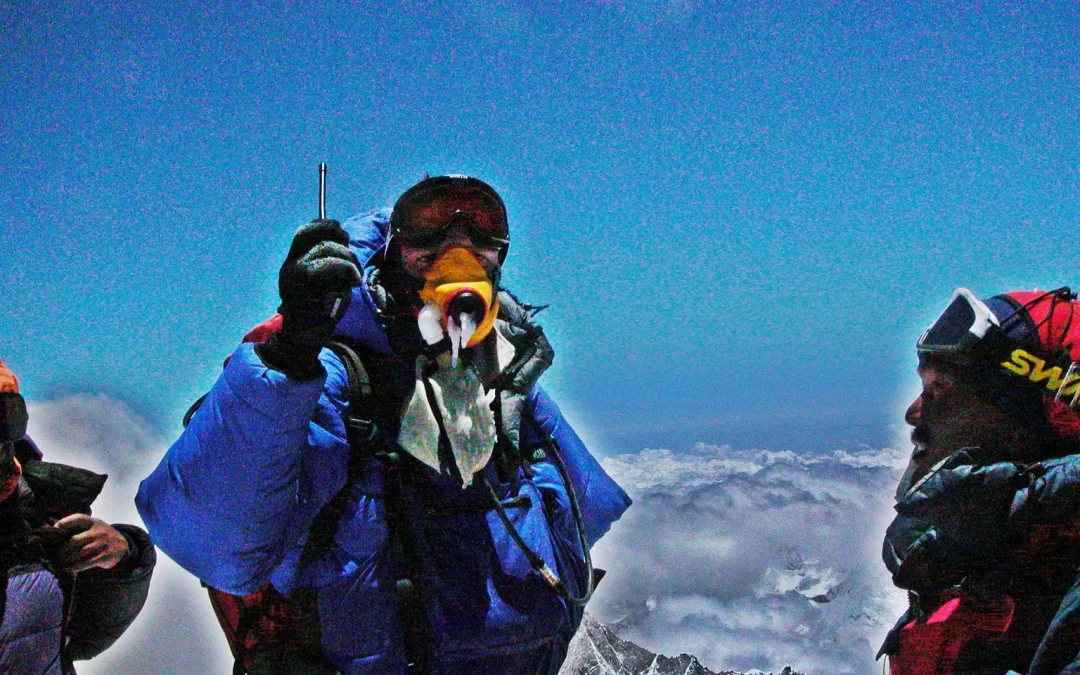
At 29,000 feet, a leadership decision is never theoretical. A missed weather window, an exhausted teammate, a communication failure, or the choice to keep pushing can change the outcome for everyone on the mountain. The most enduring leadership lessons from Everest are not about bravado or standing alone at the summit. They are about preparing with discipline, making clear decisions under pressure, and remembering that no meaningful achievement is reached alone.
For executive teams, sales organizations, and event leaders facing aggressive goals, uncertainty, or change, Everest offers a vivid reminder: performance is not built when conditions are perfect. It is built long before the critical moment, through trust, accountability, inclusion, and the willingness to adapt.
1. The summit is a goal, not the whole mission
Everest is often described as a race to the top. In reality, reaching the summit is only halfway. Climbers still have to descend through thin air, fatigue, changing weather, and diminishing resources. Many of the mountain’s greatest dangers appear after the celebrated moment, when focus slips and people assume the hardest part is over.
Organizations make a similar mistake when they treat a major launch, quarterly target, acquisition, or transformation milestone as the finish line. Leaders celebrate the win, then fail to ask whether the team has the energy, systems, and support to sustain it.
Strong leadership defines success more completely. The goal matters, but so do the people returning from the effort, the relationships preserved, and the capability strengthened along the way. Ask not only, “Can we get there?” Ask, “What will it take to bring everyone through this well?”
2. Preparation earns confidence before the pressure arrives
No one trains for Everest by hoping to feel ready at Base Camp. Preparation means conditioning the body, testing equipment, studying the route, building skills, and planning for problems that may never occur. The work can feel repetitive and unglamorous. It is also what creates calm when the environment becomes unforgiving.
The same is true in business. A leadership team cannot improvise trust during a crisis if it has ignored trust during ordinary weeks. A sales organization cannot expect poise in a high-stakes customer meeting if it has not practiced its message, clarified roles, and learned from prior objections.
Preparation should not become paralysis. Conditions change, and every plan meets reality eventually. But preparation gives teams a foundation from which to adapt. It turns anxiety into useful awareness and replaces vague optimism with earned confidence.
3. Clear communication is a safety system
At altitude, small misunderstandings can become large consequences. A teammate needs to know the pace, the turnaround time, the next move, and whether it is safe to continue. People must be able to speak honestly about fatigue, symptoms, fear, and uncertainty without being dismissed or judged.
In a company, communication is often treated as a soft skill. Under pressure, it is an execution skill. Leaders must make priorities visible, define what success looks like, and state the nonnegotiables. They also need to create room for information to travel upward, not just downward.
That requires more than frequent updates. It requires clarity. A leader who says, “We need to move faster,” may create urgency but not direction. A leader who says, “Our priority is retaining this client, protecting service quality, and deciding by Thursday who owns each recovery action,” gives the team something they can act on.
4. Trust the people closest to the reality
The best expedition leaders do not confuse leadership with having every answer. On a mountain, guides, climbers, medical professionals, and support teams may each see risks that others cannot. Wise leadership listens to expertise, invites dissent, and makes decisions with the best available information.
This lesson becomes especially important for senior leaders who are separated from the customer, the frontline, or the day-to-day operational pressure. Distance can create false certainty. The people closest to the work often recognize a warning sign, an opportunity, or an unintended consequence first.
Listening does not mean every decision becomes a committee vote. There are moments when a leader must decide quickly and own the call. But teams perform better when they know their experience is valued and their candor will not be punished. Trust is not a vague cultural aspiration. It is a practical advantage when the path ahead is unclear.
5. Inclusion makes the team more capable
Gary Guller became the first person with one arm to summit Mount Everest, demonstrating that assumptions about limitation can be profoundly wrong. His leadership of a record-setting cross-disability expedition to Everest Base Camp carried the same message: difference is not a deficit, and teams become stronger when people are seen for their capability rather than reduced to an obstacle others imagine for them.
For business leaders, inclusion is not simply about representation in a photo or a statement of values. It is about whether people can contribute fully, be heard clearly, and receive the support needed to perform at a high level. It asks leaders to examine the assumptions built into meetings, systems, opportunities, and definitions of “fit.”
Inclusive leadership does not lower standards. It raises them by widening the field of talent, perspective, and problem-solving available to the organization. The goal is not to make the climb easier by pretending obstacles do not exist. The goal is to build a team capable of meeting real obstacles together.
6. Know when turning back is the strongest decision
One of the hardest truths on Everest is that the summit is optional. Coming home is not. Weather, health, timing, and team condition can make the most courageous decision a turnaround rather than a push forward.
Corporate culture often celebrates relentless persistence without enough regard for judgment. There is a difference between resilience and refusal to see reality. A product initiative may need to be paused. A deal may need to be declined. A team may need more resources before taking on another major commitment. Leaders who cannot change course can place their people, reputation, and future capacity at risk.
The trade-off is real. Turning back can cost time, money, momentum, and pride. Yet an organization that learns to make disciplined decisions protects its ability to pursue the next opportunity. Courage is not always charging ahead. Sometimes it is saying, “Not this way, not now,” while keeping the larger mission intact.
7. Resilience is built through shared purpose
There are moments in any demanding expedition when individual willpower is not enough. The cold is real. The distance is real. The next step can feel impossibly far away. What carries people forward is often a combination of personal purpose and the knowledge that others are counting on them.
Teams experience their own version of this during change, growth, recovery, and intense performance cycles. Leaders cannot eliminate every difficult moment, nor should they pretend difficulty is inspirational while people are living through it. What they can do is connect effort to meaning, recognize progress honestly, and reinforce the sense that no one is carrying the load alone.
Purpose must be specific to be credible. “We are changing the industry” may inspire some audiences, but it will not guide behavior like a clear connection between the work and the customers, communities, colleagues, or future the team serves. When people understand why the climb matters, they are more likely to bring their best to the next hard step.
Applying leadership lessons from Everest at work
Everest is an extreme environment, but the principles travel well. Before your next high-pressure initiative, consider whether your team has a shared definition of success, a clear decision structure, and permission to surface concerns early. Look for the voices that may not be reaching the room. Clarify what would cause you to pause, pivot, or walk away.
Most of all, lead in a way that makes other people stronger. The highest-performing teams do not depend on one heroic figure at the front. They build readiness, share responsibility, and meet adversity with an unshakable belief that together, anything is possible.
The next summit in your organization may not look like a mountain. It may be a demanding year, a bold growth target, a complex transition, or a team learning to trust itself again. Take the next step with intention, bring the right people into the climb, and make sure the achievement is one everyone can carry forward.