
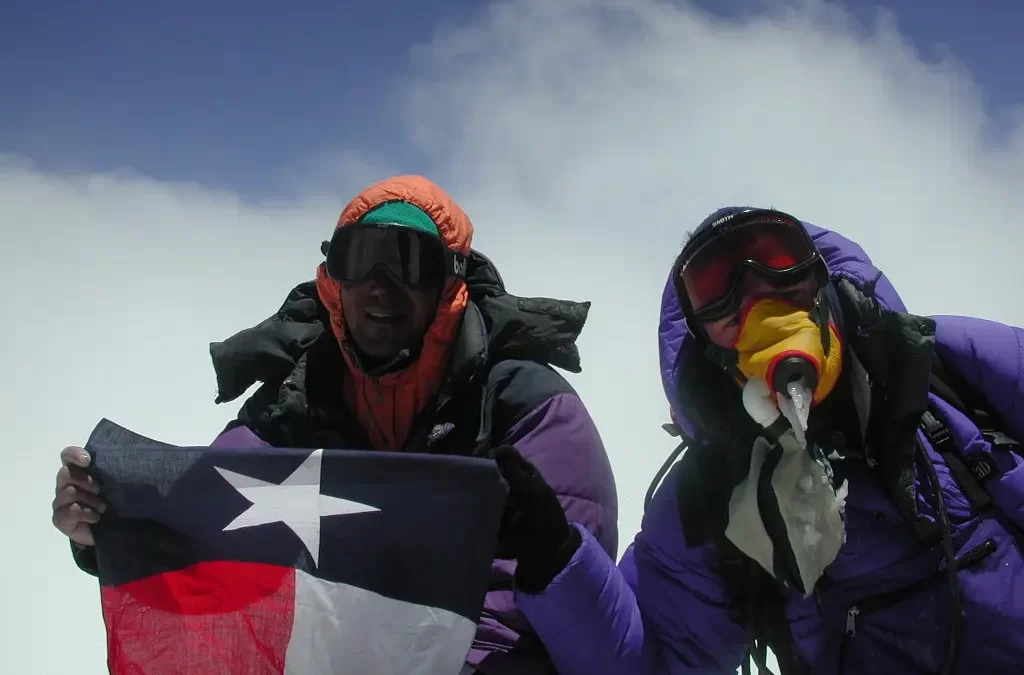
At 29,000 feet, no one reaches the summit alone. A climber may take the final steps, but every step depends on people who prepared, communicated, carried their share, made difficult calls, and chose the team over ego. That is the heart of collective leadership Gary Guller has lived on Everest and brought into boardrooms, sales organizations, universities, and global corporate events.
Gary became the first person with one arm to summit Mount Everest. The achievement is extraordinary, but the lesson is not that exceptional people should carry impossible burdens by themselves. It is that ambitious goals demand shared ownership. On a mountain, a missed weather change, an unspoken concern, or a teammate left behind can change everything. In an organization, the stakes look different, but the principle holds: performance rises when leadership is practiced across the team, not held by a title alone.
Collective Leadership With Gary Guller: What It Means
Collective leadership is not a committee where everyone has equal authority over every decision. It is also not a softened version of accountability. Clear leaders still set direction, make final calls, and own outcomes. The difference is that they create an environment where expertise, concern, initiative, and responsibility can come from every level of the organization.
On an Everest expedition, the person closest to the risk may see something the expedition leader cannot. A guide may identify a dangerous shift in conditions. A teammate may recognize that someone is conserving too much energy, struggling silently, or losing focus. The strongest team does not wait for the most senior voice to notice every signal. It gives people permission and responsibility to speak early.
That is particularly relevant for organizations facing rapid change. Senior executives may hold the strategic view, while frontline employees encounter customer objections, operational friction, and emerging risks first. If information only travels upward through layers of hesitation, opportunity is lost and problems become expensive.
Collective leadership turns more people into active contributors to the mission. It asks: Who has the clearest view of this challenge? What do they need to act? Are we rewarding people for raising a difficult truth before it becomes a crisis?
The Everest Test: Trust Before Pressure Arrives
Teams do not build trust during their hardest moment. They reveal the trust they built before it.
Before a major climb, expedition members prepare equipment, study conditions, establish communication practices, and learn how each person responds to fatigue and uncertainty. Preparation is not glamorous, yet it is what makes a decisive response possible when conditions deteriorate. The same is true before a product launch, a merger, a sales kickoff, or a high-stakes client presentation.
For leaders, this means trust cannot be reduced to a team-building exercise or a statement on a values poster. Trust is operational. It grows when people keep commitments, share context, acknowledge limits, and follow through when their contribution is needed.
It also requires vulnerability. Gary Guller’s story carries force because it does not pretend adversity disappears through positive thinking. Climbing with one arm required adaptation, discipline, support, and the willingness to ask for help when help was necessary. That is not weakness. It is mature leadership.
In many companies, employees are expected to perform under pressure while feeling they must hide uncertainty. The result is predictable: concerns arrive too late, collaboration becomes guarded, and capable people operate below their potential. A leader who can say, “Here is what I see, here is what I need, and here is what I may be missing,” creates room for others to do the same.
Shared ownership is not shared confusion
There is a trade-off. Inviting broad input can slow a decision if roles are unclear. In dangerous conditions, an expedition cannot hold an endless debate about whether to descend. Likewise, a business cannot convene every stakeholder for every decision.
The answer is not to return to command-and-control leadership. It is to establish decision rights before the pressure peaks. Teams need to know where consultation is expected, who makes the final call, what information must be surfaced, and how they will respond after a decision is made.
When those expectations are clear, people can contribute without creating gridlock. The leader has better intelligence. Team members have greater ownership. Execution gains speed because fewer people are left wondering what happens next.
Four Habits That Make Collective Leadership Real
The shift from individual leadership to collective leadership is built through repeated behavior, not a single inspirational message. Organizations that want stronger shared ownership can begin with four practical habits.
- Make the mission visible. Teams cannot lead collectively if they do not understand the destination. Connect daily priorities to a clear objective, whether that is earning a client’s trust, improving safety, gaining market share, or delivering an exceptional event experience.
- Ask for the signal, not just the status. Status updates tell leaders what has happened. Signals reveal what could happen next. Invite people to identify weak points, customer patterns, capacity concerns, and overlooked opportunities while there is still time to respond.
- Give ownership with boundaries. Delegation without authority frustrates people. Define the outcome, the guardrails, the available resources, and the point at which escalation is required. Then let capable people act.
- Debrief without blame. After a difficult push, strong expeditions examine choices, conditions, communication, and recovery. High-performing organizations do the same. Ask what worked, what was missed, and what needs to change before the next challenge.
These habits can feel simple. Their effect is not. They replace passive compliance with active participation, which is essential when goals are high and conditions are changing.
Why Inclusion Strengthens Execution
Gary Guller also brings a perspective that many leadership conversations miss: inclusion is not separate from performance. It is a performance advantage.
His record-setting cross-disability expedition to Everest Base Camp demonstrated what becomes possible when teams stop defining people by a perceived limitation and start organizing around capability, preparation, and mutual support. That does not mean pretending differences do not exist. It means designing teams where differences are respected, practical needs are addressed, and every person has a meaningful way to contribute.
For executives, this has direct implications. A culture that values only one communication style, one career path, or one image of leadership leaves useful talent on the sidelines. A culture that welcomes varied perspectives can see more of the terrain ahead.
Inclusion alone does not create results. Teams still need standards, candor, accountability, and a shared commitment to execution. But when people know their voice is valued and their contribution matters, they are more likely to bring their best judgment to the work. That is how belonging becomes a business capability rather than a slogan.
The Leader’s Role at the Top of the World
Collective leadership does not make the formal leader less important. It makes that role more demanding.
The leader must set a compelling summit, create the conditions for honest communication, and hold the team to standards when fatigue or fear makes shortcuts tempting. They must know when to listen widely and when to decide decisively. They must protect the mission while remembering that no milestone is worth abandoning the people who make it possible.
That final point matters. In business, the pressure to hit a number or meet a deadline can make leaders treat people as resources to be consumed. Everest offers a sharper perspective. The summit is only halfway. A team’s true strength is measured by how it gets everyone through the challenge, learns from the effort, and is ready for what comes next.
A keynote experience with Gary Guller gives audiences more than an inspiring summit image. Through vivid expedition stories, personal vulnerability, and a high-impact multimedia presentation, he helps teams see their own difficult climb with greater clarity. The message is bold but grounded: extraordinary performance is not reserved for a select few. It is built when people communicate honestly, take ownership, support one another, and keep moving forward together.
The next major goal may not look like Everest. It may be a demanding quarter, a cultural transformation, a client relationship that must be won back, or a strategy that requires people to operate beyond familiar limits. Start by making the mission shared. Give people room to lead. When the pressure rises, your team may discover that together, anything is possible.