
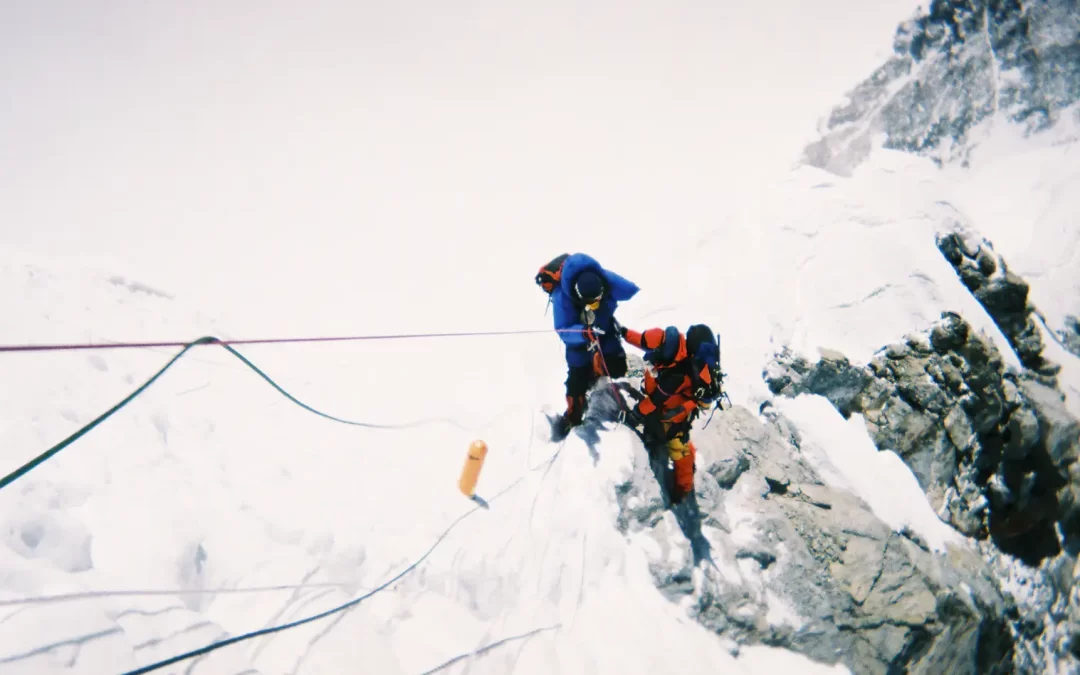
A Gary Guller survival speaker keynote does not ask an audience to imagine a vague version of courage. It brings them to the cold, thin air above the clouds, where every decision has consequences, every teammate matters, and turning back can be as courageous as moving forward.
For leaders planning a sales kickoff, leadership meeting, client event, university program, or company-wide conference, that difference matters. Many speakers can talk about overcoming adversity. Gary Guller has built a life around confronting it directly – as the first person with one arm to summit Mount Everest, an endurance athlete, expedition leader, author, and documentary subject. His story earns attention. The lessons behind it give audiences a reason to act.
What Makes Gary Guller a Survival Speaker?
“Survival speaker” can suggest wilderness instruction or dramatic hardship for its own sake. Gary’s work is more meaningful than either. He uses extraordinary survival experiences to reveal what high-performing people and teams need when plans change, pressure rises, and the path ahead becomes uncertain.
On Everest, no one reaches the summit through motivation alone. Preparation matters. Trust matters. Clear communication matters. So does the ability to acknowledge a changing reality without losing sight of the mission. Those are not abstract expedition ideals. They are the same disciplines that determine whether a leadership team can navigate disruption, whether a sales organization can recover from a difficult quarter, or whether a company can turn an ambitious strategy into coordinated execution.
Gary’s achievement is remarkable not because it asks audiences to compare their challenges with a mountain. It is remarkable because it makes a powerful truth impossible to ignore: limits are real, but they are rarely the whole story. What happens next depends on preparation, perspective, support, and the willingness to take the next disciplined step.
Survival Lessons That Belong in the Boardroom
A great keynote must do more than create an emotional moment. It must give people language they can carry into the meeting after the meeting. Gary translates expedition experience into lessons that connect with the daily realities of professional teams.
Leadership begins with a clear mission
At altitude, energy is finite. Every unnecessary move has a cost. Teams need to know where they are going, why it matters, and what success looks like before conditions become difficult.
Business leaders face a similar responsibility. During growth, transformation, or uncertainty, a compelling vision is not enough by itself. People need priorities they can understand and decisions they can connect to the larger goal. Gary’s journey reinforces the value of setting a bold objective while remaining disciplined about the route required to reach it.
That message is especially valuable for executives asking teams to execute through change. A summit mentality is not blind optimism. It is commitment paired with planning, accountability, and the humility to adjust when facts demand it.
Teamwork is not a slogan
No Everest climber succeeds alone. Behind every major ascent are guides, climbing partners, family, planners, supporters, and people who recognize danger when someone else may be too exhausted to see it clearly. The mountain exposes what is true in any organization: individual talent matters, but coordinated trust carries the team farther.
Gary brings particular depth to this point through his leadership of a record-setting cross-disability Everest Base Camp expedition. That experience challenges audiences to think beyond surface-level inclusion. High-performing teams do not merely make room for difference. They recognize the distinct strengths, perspectives, and problem-solving ability every person brings to the mission.
For HR and learning leaders, this creates a meaningful bridge between inclusion and performance. For executives, it makes the case that culture is not separate from results. A team that communicates honestly, plans together, and respects different capabilities is better equipped to respond when conditions shift.
Resilience means responding, not pretending
Resilience is often described as toughness. But toughness without awareness can lead people to ignore warning signs, conceal struggles, and push beyond the point of sound judgment. Gary’s story offers a more useful definition.
Real resilience is the capacity to face what is difficult, accept what cannot be changed in that moment, and choose a constructive next action. It can mean pushing forward. It can also mean asking for help, revising a plan, or making the disciplined decision to stop before a temporary setback becomes a permanent loss.
That nuance matters in corporate settings. Teams under pressure do not need a speaker who tells them to simply work harder. They need permission to be honest about obstacles and practical inspiration to move through them together. Gary’s vulnerability gives that message credibility. His accomplishments prove that adapting is not a retreat from ambition. It is often how ambitious goals are achieved.
Communication becomes critical under pressure
The higher the stakes, the less room there is for vague communication. On an expedition, assumptions can put people at risk. Team members must share changing conditions, raise concerns early, listen carefully, and understand the plan.
The same is true during a product launch, organizational integration, difficult client situation, or period of rapid growth. Leaders cannot assume alignment because a message was delivered once. They must create conditions where people can ask questions, identify risks, and contribute information that may change the outcome.
A Gary Guller keynote makes this principle memorable because the consequences are visible. His multimedia storytelling, expedition imagery, and personal experience turn communication from a management cliché into something audiences feel. The result is a shared reference point employees can return to long after the event ends.
Why the Story Moves Professional Audiences
Corporate audiences are discerning. They have heard polished presentations, familiar leadership models, and motivational phrases that fade before the next coffee break. To create a lasting impact, a keynote needs authority, relevance, and emotional truth.
Gary brings all three. His Everest summit is not a borrowed metaphor. His endurance accomplishments are not theoretical case studies. They are lived evidence of sustained preparation, setbacks, risk assessment, teamwork, and resolve. Yet the presentation is not centered on celebrating one person’s achievement. It is built to help the audience see its own potential.
That distinction is what makes the story work across roles and industries. A senior executive may hear a lesson about strategic leadership and decision-making. A sales team may connect with persistence, confidence, and owning the next call after rejection. An employee navigating personal change may recognize that progress does not require feeling fearless. It requires taking one meaningful step while fear is present.
For event planners, the format also matters. A vivid multimedia experience creates a genuine shared moment in a room that may otherwise contain people with very different responsibilities and priorities. It raises energy without relying on empty hype, then directs that energy toward practical themes the organization already cares about: execution, trust, resilience, leadership, and belonging.
Choosing a Survival Speaker for Your Event
The right speaker depends on the purpose of the program. If the goal is technical outdoor training, an expedition storyteller may not be the best fit. But if the goal is to energize a professional audience while reinforcing the behaviors required for meaningful performance, Gary’s experience provides an unusually strong platform.
Consider the challenge your audience is facing. Are leaders trying to unite teams around a demanding strategy? Is a sales organization preparing to pursue an ambitious target? Is the company working to strengthen communication and accountability? Is the event an opportunity to demonstrate that inclusion, resilience, and high standards belong together?
A keynote is most effective when the speaker’s message supports a clear business intention. Gary’s story can be tailored to the moment, but it remains grounded in the same enduring principle: no one gets to the top alone. The strongest teams prepare with purpose, communicate with honesty, adapt with courage, and keep moving toward a shared goal.
When people leave an event believing that together anything is possible, the next step is to give that belief a place to go. Connect the message to the conversations, commitments, and actions your team will take when the room clears. That is how inspiration becomes momentum.