
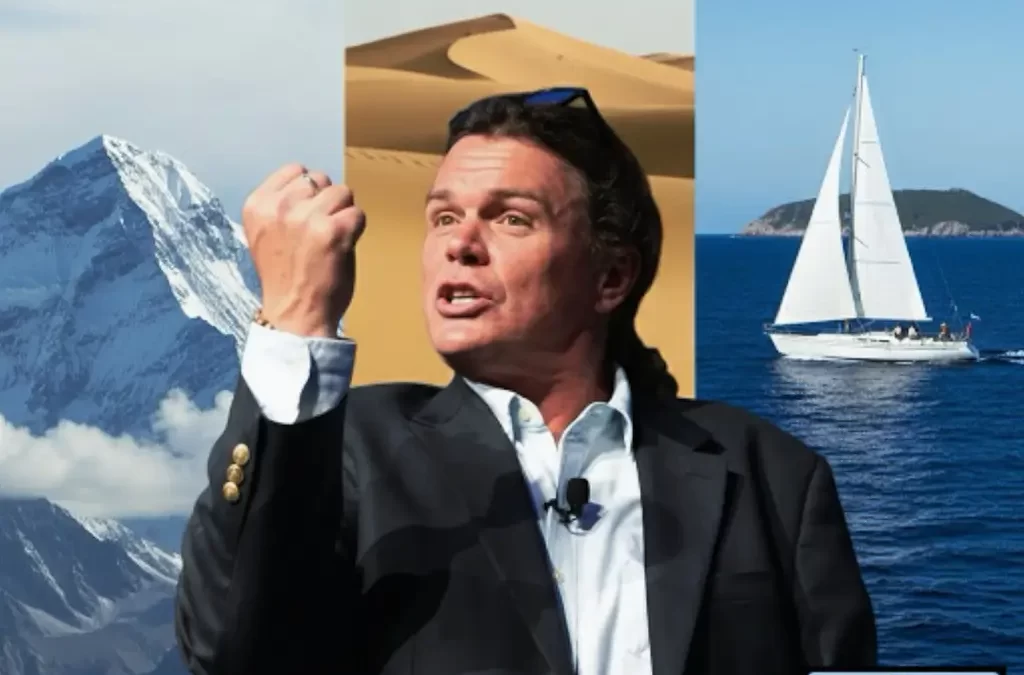
At 29,032 feet, motivation is not a slogan. It is a decision made while exhausted, exposed to risk, and responsible for the people moving beside you. That is what sets an Everest summit Gary Guller keynote speaker experience apart. Gary Guller does not offer adversity as an abstract idea. He brings audiences inside the real choices, preparation, setbacks, and teamwork behind becoming the first person with one arm to summit Mount Everest.
For leaders planning a sales kickoff, leadership meeting, client event, university program, or company-wide conference, the question is not simply whether a speaker can inspire a room. It is whether that inspiration will stay with people when the meeting ends and the real pressure begins. Gary’s Everest story creates that kind of lasting connection because it makes high performance personal, visual, and practical.
Everest Summit Gary Guller Keynote Speaker: More Than a Story
Many speakers can tell an impressive story. A powerful keynote turns that story into a shared experience with a clear application for the audience in front of it.
Gary’s journey to Everest began long before the summit push. After losing his arm in an electrical accident as a teenager, he faced a future that looked radically different from the one he had imagined. The defining factor was not denial of that reality. It was a willingness to confront it, adapt, train, and continue moving toward difficult goals.
That distinction matters in business. Teams do not need to pretend that change, competition, reorganization, or uncertainty are easy. They need a credible framework for meeting those conditions with discipline and belief. Gary speaks from a place of earned authority and genuine vulnerability, showing that limitations can be real without becoming final.
The summit is the headline, but it is not the whole message. Everest becomes a powerful lens for examining how people prepare, communicate, make decisions, and care for one another when the margin for error becomes narrow.
What Corporate Audiences Take From the Mountain
A mountain expedition is a team performance environment in its purest form. Every person has individual responsibilities, but no one reaches the objective alone. A climber’s strength is meaningful only when it supports the pace, safety, and success of the full team.
That makes Gary’s keynote especially relevant for organizations trying to strengthen execution across departments or bring a dispersed workforce around a demanding objective. His stories give leaders a vivid way to discuss accountability without reducing it to a slide deck. On Everest, failing to communicate a changing condition can affect everyone. In a company, the stakes may look different, but the principle holds: unclear communication creates unnecessary risk.
Gary also led a record-setting cross-disability expedition to Everest Base Camp. That experience expands the conversation beyond individual determination. It demonstrates what becomes possible when a team sees capability before limitation, plans intelligently, and creates the conditions for every person to contribute.
For HR and learning leaders, this is a meaningful entry point into inclusion. Inclusion is not a ceremonial value statement. It is a performance advantage. Teams make better decisions when people are respected, equipped, heard, and trusted to bring their full ability to the work.
Resilience Is Built Before the Crisis
One of the most useful lessons from Everest is that resilience is not reserved for the dramatic moment. It is built in advance through preparation, recovery, mindset, and the daily choice to keep commitments.
Corporate audiences often face a familiar version of altitude: ambitious targets, limited resources, rapid change, and rising expectations. The temptation is to wait for a major obstacle before talking about resilience. Gary’s experience shows why that is too late. Strong teams prepare for setbacks before they arrive. They establish trust before decisions become urgent. They train for the conditions they hope not to face.
This is also where Gary’s message avoids empty toughness. Resilience does not mean ignoring fatigue, refusing help, or pushing ahead at any cost. On a mountain, that mindset can be dangerous. In an organization, it can lead to burnout, poor judgment, and disengagement. Real resilience includes the courage to reassess, ask for support, and choose the next right step.
Performance Requires Purpose and Precision
A summit attempt is fueled by purpose, but purpose alone does not carry a climber through the hardest miles. It must be paired with execution. Gear is checked. Weather is monitored. Roles are understood. Energy is managed. A team adjusts to what the mountain gives it.
That balance resonates with executive leaders and sales organizations. A bold vision matters, especially when a company is asking people to exceed a previous standard. Yet vision without follow-through can become another message that fades after an event. Gary connects aspiration to the habits that make ambitious outcomes credible: preparation, focus, communication, adaptability, and personal responsibility.
For a sales kickoff, the message can reinforce the discipline behind pipeline growth, prospecting, customer trust, and recovery after a lost opportunity. For a leadership conference, it can sharpen the conversation around decision-making and modeling composure. For an investor, shareholder, or client-appreciation gathering, it can bring an unmistakable sense of courage and possibility to the room.
The application depends on the event’s objective. That flexibility is valuable. The core story remains authentic, while the lessons can support the strategic moment an organization is navigating.
Why a Multimedia Keynote Changes the Room
Everest is difficult to comprehend from words alone. The scale, exposure, weather, and human effort need to be seen as well as heard. Gary’s multimedia keynote format gives audiences that visual evidence, combining expedition imagery and documentary elements with direct, personal storytelling.
This matters for event planners who need more than a competent presentation. They need a moment that unifies a room with different job titles, experiences, and perspectives. A compelling visual story can do that. It creates an emotional reference point people continue to use in conversations after the conference.
The strongest keynotes do not merely earn applause. They give teams language they can bring back to their work. After hearing Gary, a group may recognize its own “base camp” preparation, its communication gaps, or the importance of checking on the person beside them. Those are not generic takeaways. They are memorable connections to a story few people will ever experience firsthand.
Choosing the Right Keynote for the Stakes of Your Event
Booking a motivational speaker is not simply about selecting a recognizable accomplishment. The speaker must match the audience, the business message, and the level of trust the event demands.
Gary is a strong fit when an organization wants to reinforce perseverance, teamwork, leadership, communication, disability inclusion, and high-performance execution through an experience that is undeniably real. His story reaches senior executives without losing the human connection that broad employee audiences need. It carries the gravity of an extraordinary achievement while making room for the fears, failures, and doubts that every person recognizes.
There is a trade-off worth considering. If an event only needs a technical lecture on a narrowly specialized business topic, an industry analyst may be the better choice. But when leaders need to move people emotionally while anchoring strategic priorities in action, lived experience can carry a different kind of authority.
That is the value of a Gary Guller keynote. The message is not that everyone must climb Everest. It is that every team has a mountain – a goal that will demand more courage, collaboration, and commitment than ordinary effort can provide.
The next challenge may not look like a snow-covered summit. It may be a difficult quarter, a new market, a culture shift, or a team learning to trust one another again. Whatever the climb, people leave with a reminder worth carrying forward: together, anything is possible when preparation meets purpose and no one is left to face the ascent alone.